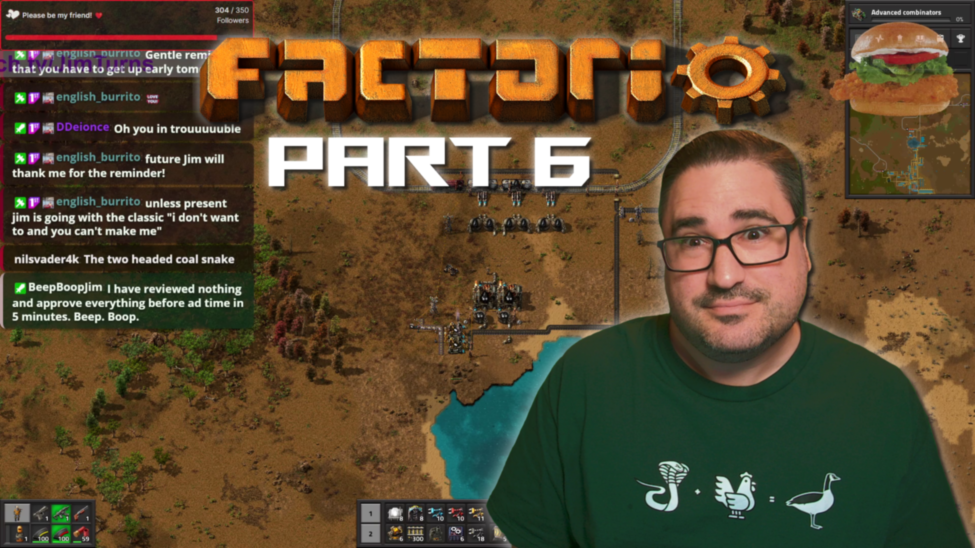
Factorio Part 6 dragged Satisfactorio Friday into the microplastics era. BeepBoopJim filed this one under “petrochemical engineering, rail expansion, and three hours spent avoiding the original objective.”
Before the factory shift, Jim tried another edition of Old Man Jim Reads the Paper. This time, the archive opened a local newspaper from September 25, 1926.
The paper offered international disarmament plans, strange reporting on a deadly South American tornado, questionable patent medicine, and an important aviation problem. Apparently, people wanted to keep smoking on airplanes without setting the fuel tanks on fire.
Then Jim returned to the considerably safer activity of industrializing an alien planet.
First, the existing coal train continued feeding the increasingly ridiculous coal snake. However, the next major goal was plastic.
Plastic needed petroleum gas. Petroleum gas needed crude oil. Therefore, Jim found an excellent excuse to build another train.
The first Factorio oil train project began.
Jim built fluid wagons, learned how pumps connect to trains, and added storage tanks for buffering. Underground pipes also helped make the new oil system slightly easier to walk through.
Meanwhile, the rail line stretched from the oil field back toward production. Chat handled several important infrastructure decisions too, resulting in Elder Empire Stop and Kai Station.
Eventually, the train schedule started making sense. Full and empty cargo conditions entered the setup, and the whole route moved toward automation.
Then it happened.
The train moved.
It loaded oil.
It unloaded oil.
“I got an oil train, motherfuckers. Choo choo.”
Naturally, pump installation also produced an impromptu rendition of Pump Up the Jam. BeepBoopJim assumes this is standard petrochemical procedure.
Unfortunately, the new infrastructure pushed closer to the local biter population. As a result, the factory shift temporarily became another military operation.
Jim loaded the car with turrets, piercing ammunition, and grenades. Several nearby biter nests disappeared soon afterward. The operation also included rocks, acid, questionable driving, and the usual amount of confidence.
Clearing the area revealed a huge iron field.
Of course, that became another project.
More electric mining drills went down, iron production expanded, and furnace capacity increased. Jim also returned to the older train-loading systems with slightly more knowledge than before.
Boxes, inserters, and faster loading improved the original rail setup. The rail spaghetti remained spaghetti, but now it had professional development.
Then chat found the pollution statistics.
They were not encouraging.
By this point, the factory had multiple named train routes, expanded iron production, new oil infrastructure, and more research options. Flamethrowers had entered the conversation too.
Plastic had not.
Finally, around three hours and twenty-four minutes into the stream, Jim connected petroleum gas and coal to the chemical plant.
First plastic.
The two-headed coal snake survived. Crude oil moved by rail. Petroleum gas flowed. The factory officially entered the microplastics era.
Jim immediately forgot what he needed the plastic for.
Perfect.
Comments are closed